Fall 2014—Immigration: An Issue Of Respect And The Rule Of Law

It was uncharacteristic of me to plan this blog
post’s topic long in advance; I normally wait until a week or two beforehand to
actually decide what I am going to post about. That said, I think it’s
interesting that when I chose months ago to focus on the controversial issue of
immigration for this fall’s blog post, I had no idea how timely this choice
would end up being.
As a college student studying to be a public school
teacher, I am often forced to participate in classes that teach principles I do
not necessarily embrace or agree with. This past semester, I enrolled in a
multicultural education class in which the teacher has emphasized the need for
us teachers to learn about and empathize with our future students who may come
from immigrant families. While I understand the need to learn about and
empathize with those who come from an immigrant background, I cannot say that I
fully agree with or embrace some of the teachings in that class. I will not go
into detail here about my experience with that class, but I will mention that
immigration has definitely been on my mind these past few months; the
controversial nature of the immigration debate has been brought home to me in
many poignant and personal ways, and my own feelings have been exacerbated by
the latest clashes about immigration reform at the national level of our
government. In my multiculturalism class, I have been made to read an entire
biography of an illegal immigrant’s experience in 1950’s America, a book
clearly designed to make me feel guilty for what my country has “done” to
racial minorities who have ignored the laws of the land. I have read
testimonials of illegal immigrants who feel “betrayed” by the U.S. educational
system (even though the U.S. education system should be designed to primarily
serve the needs of taxpaying citizens), and I have read articles that teach
that white American males who oppose the “rights” of racial minorities are
nothing better than unconscious oppressors, at best.
It is not my intention to explore the disgusting
nuances of these ridiculous arguments. Rather, it is my intention today to
focus on the immigration issue in the strictest sense. It is my intention to
completely ignore the racist arguments made by individuals on both sides of the
debate. Racially-motivated arguments have no legitimate place in the
immigration debate IF all parties involved truly believe in the racial
“color-blindness” that gets talked so much about but seems to get so little
practical adherence.
 No, I intend to show that the issue of immigration—specifically
the issue of illegal immigration—presents some very real challenges to the
American nation, and that these challenges deserve appropriate solutions that
respect the rule of law AND the dignity of human beings all while promoting the
values associated with civic virtue and good citizenship.
No, I intend to show that the issue of immigration—specifically
the issue of illegal immigration—presents some very real challenges to the
American nation, and that these challenges deserve appropriate solutions that
respect the rule of law AND the dignity of human beings all while promoting the
values associated with civic virtue and good citizenship.
I wish to clearly state that I am an enthusiastic
supporter of LEGAL immigration to this country. The strength of our nation can
be reflected in the desperate desire of so much of the world’s population to
move to and settle down in the United States of America. At the same time, I
feel just as strongly that ILLEGAL immigration into the United States poses a
dangerous and destabilizing threat to the lives of the immigrants themselves
and the health, safety, and self-respect of U.S. citizens. Illegal immigration
cheapens the lives of illegal immigrants and threatens the U.S. with potential
public health disasters, major national security pressures, national
sovereignty violations, and—worst of all—the denigration of the otherwise
honorable definition of citizenship.
How does illegal immigration cheapen the lives of
illegal immigrants and threaten the U.S. with national security pressures?
 In August of this year, it was discovered that
Mexican drug cartels have increased their violent presence in the already
dangerous regions around the southern U.S. border. James Phelps, an assistant
professor in the Department of Security Studies and Criminal Justice at Angelo
State University in Texas, said that because much more heavily-armed drug
shipments are coming into the United States, the cartels are turning to the use
of deadlier weapons, like hand grenades, to ensure that their control over the
illegal immigrant and illegal drug trades go unchallenged by anyone. Phelps
went on to explain that “with Border Patrol so heavily distracted doing
paperwork and watching the mass flood of people coming into the country, they
don’t have as much time to do what they used to do — drug interdiction.”
In August of this year, it was discovered that
Mexican drug cartels have increased their violent presence in the already
dangerous regions around the southern U.S. border. James Phelps, an assistant
professor in the Department of Security Studies and Criminal Justice at Angelo
State University in Texas, said that because much more heavily-armed drug
shipments are coming into the United States, the cartels are turning to the use
of deadlier weapons, like hand grenades, to ensure that their control over the
illegal immigrant and illegal drug trades go unchallenged by anyone. Phelps
went on to explain that “with Border Patrol so heavily distracted doing
paperwork and watching the mass flood of people coming into the country, they
don’t have as much time to do what they used to do — drug interdiction.”
Reports from other news services as well as the FBI
confirmed that the Los Zetas cartel—the same infamous organization responsible
for many kidnappings-for-ransom—began recruiting and relying on
“non-traditional, non-military trained associates,” or US-based prison and
street gangs or non-Mexican nationals to support its drug trafficking
operations. Los Zetas and other cartels have stockpiled weapons, including
assault rifles and grenades, at safe houses in the United States years earlier
in response to crackdowns on both sides of the border against drug traffickers.
This long-established pattern of behavior indicates how badly the cartels want
to increase their control over the border regions, and how far they are willing
to go to violently resist anyone who seeks to end their dominance of the
U.S.-Mexico border. James Phelps said that “at some point, probably within the
next 6-12 months, you’re going to start seeing shooting incidents between the
cartels and the agencies attempting to stop them as they move further into the
United States.”

Because illegal immigration is so closely tied to
organized crime, and because these criminal organizations represent a real and
violent threat to law-enforcement agents and to the thousands of unfortunate
innocents that get smuggled across U.S. borders, I am adamantly opposed to
illegal immigration. I recently read an article in the National Geographic magazine which went into great detail
describing how many illegal immigrants end up sold into some form of slave
labor here in the United States. This knowledge further increased my devotion
to the anti-illegal immigration cause. Individuals who come to the United
States should come here in a manner that is above-board and legally legitimate.
They should do this not just because it’s the right thing to do, but because it
is ultimately better, safer, and healthier for them and their loved ones.
Illegal immigration feeds organized lawlessness and is therefore a direct
threat to the peace and security of freedom-loving people in every country.
It is crucial for maturity to be used when
describing illegal immigration as a national security threat. There are some
politicians and political parties that have sought to abuse the immigration
issue’s unique relationship with the national security equation. On August 21st
of this year, it was reported that Democratic State Representative and
candidate for U.S. representative Pat Murphy was quoted as saying that if the
underage migrants who have come to the U.S. from Central America aren’t given a
“pathway for citizenship” they could become terrorists. Murphy went even
further by saying that “we need to make sure that we take care of the children
that are coming up here. They’re not from Mexico, they’re coming from further
south. We need to make sure that when we’re talking about these children we
need to treat them like they’re our children or our grandchildren. If they’re
gonna be refugees, which several of them are going to be, we need to make sure
that we have—one, we take care of them, and we create a pathway for citizenship
and set up education for them so they don’t become the same problem that we’re
currently having in the Middle East—that they’ll be terrorists a generation
from now.”
It really bothers me that politicians like Murphy
would say such things on the same day that ISIS released the beheading video of
American journalist James Foley. It showed an obvious attempt by Murphy to gain
leverage over the immigrant argument by using fear about the War On Terror.
Furthermore, I find it troubling that he would make the claim that we are
obligated, as a country, to treat illegal immigrants of ANY age group with the same
kind of compulsion and responsibility that fellow citizens would deserve.
Other Democratic politicians have unfairly abused
the immigration issue. Sometime around August 30th, I learned about
President Barack Obama’s plans to use executive action on immigration after the
November midterm elections. Even though House Republicans refused to pass
immigration overhaul legislation, and even though they said Obama’s unilateral
executive action would mean Obama is exceeding his legal authority, the
president continued to vow to go it alone. And even though many politicians in
his own party— including Mark Pryor of Arkansas, Kay
Hagan of North Carolina, Alaska's Mark Begich, and New Hampshire's Jeanne
Shaheen—oppose his plans, the president said he would make changes for
immigration on his own.
This news really bothered me because I believe the
Constitution says that Congress, not Obama, should handle the issue of
immigration.
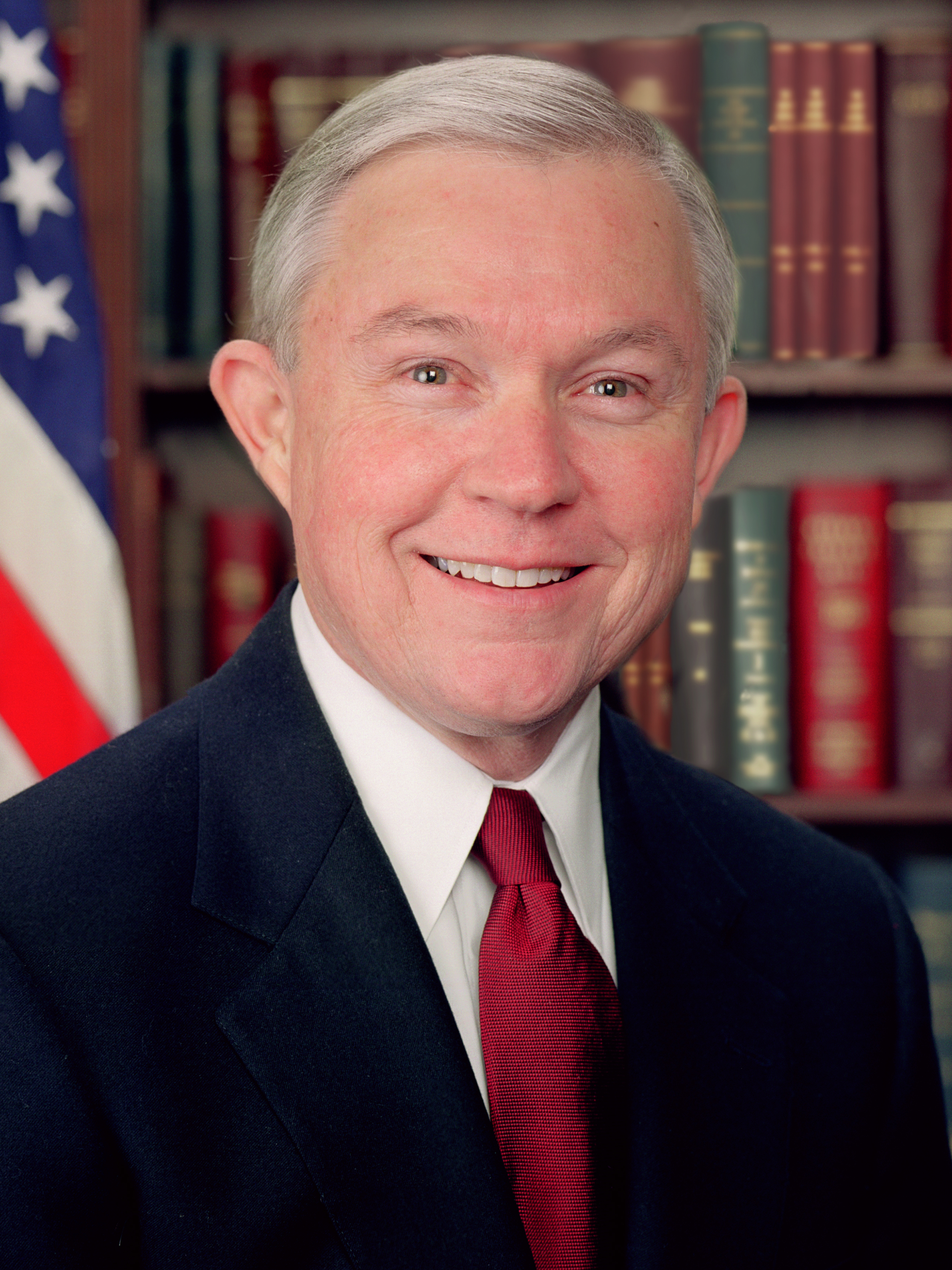
Apparently, there were some politicians who were
brave enough to share my constitutional interpretation and to act on it. Senator
Jeff Sessions (R., Ala.) wanted to offer an amendment opposing the president’s
plan, but Democrats were successful at blocking it. Although it failed, I was
happy to hear of Senator Sessions’ bravery and principles. He explained it best
when he said to his fellow Senators that “if you believe we are a sovereign
nation, with the right to control our own borders, then you must vote ‘yes.’ If
you believe America is an oligarchy, run by a group of special interests meeting
in the White House to rewrite our immigration laws, then vote ‘no.’”
Why does illegal immigration pose a threat to the
sovereignty of the United States?
Because, put simply, a state that cannot control its
own borders is not really a state at all. A sovereign state cannot exist as a
self-respecting entity without maintaining for itself the power of border
control. It seems clear to me from Obama’s own words and actions that he—and
most of the other Democrats currently in power at the national level—are not
concerned about this nation’s sovereignty as much as they are about increasing
their chances for future electoral victories. Obama’s obsession with helping to
protect illegal immigrants from the laws of the land seems to stem from his
desire to secure the Latino vote for the Democratic Party. In early October, Barack
Obama told the Congressional Hispanic Caucus almost as much. "I want to
give a special thanks to two young men who rode over with me from the White
House tonight," Obama said. "Luis and Victor are CHCI (Congressional
Hispanic Caucus Institute) interns and fellows. They are also dreamers, living
and working in the country they call home, and making it a better place for all
of us. Their stories are inspiring, and along with the other CHCI fellows, they
give me great hope for the future. They make me optimistic about what America's
all about… I'm gonna need you to have my back! I'm gonna need you to have my back! Anything I can do can be reversed by the next
president. We already know how powerful
the Latino vote can be.”
I may be wrong, but I personally believe that
President Obama cares more about the power of the Latino vote than about
protecting the sovereignty—the laws and constitutional foundations—of the
United States of America. If he truly respected the Constitution, he would
vigorously enforce existing immigration laws (he has not done this) and he
would understand that Congress is the legal body responsible for immigration
reform.
The Republicans speculated that the Obama
administration was readying a sprawling executive order that would offer legal
status to millions of illegal immigrants, and they were on the right track.
Jeff Sessions called Obama’s promise to reform immigration laws on his own a “crisis
facing our Republic,” and went on to say that “the president is preparing to
issue work authorization and ‘legal’ status to millions of individuals
illegally present in the country, in violation of plain statute.” The Alabama
lawmaker added that the executive action looked poised to “nullify the
immigration laws of the United States and its sovereign people.”

President Obama followed through on his promise to
his Latino supporters despite widespread opposition from Capitol Hill
Republicans. In a prime-time televised speech, the president announced the executive
actions he will take to change U.S. immigration law. Obama’s executive orders
are expected to protect roughly 5 million illegal immigrants from deportation,
and at least some of the estimated 5 million who would be spared from
deportation also are expected to be made eligible for work permits.
This is not how a lawful, constitutionally-minded
president should act.
Democrats like Nancy Pelosi, Luis Gutierrez, and Zoe
Lofgren have argued that Obama’s move on immigration is perfectly in-line with
the Constitution as well as precedent set by other U.S. presidents. However,
their arguments fail to explain the significant difference between Obama going
against the will of Congress, which considered and rejected the Development,
Relief, and Education for Alien Minors Act on several occasions, including when
both houses of Congress were controlled by the president’s party—and when past
presidents have made administrative corrections designed to carry out
congressional intent. There is a big difference between a president who
clarifies how existing legislation will be carried out and a president who
announces that he will act SPECIFICALLY because Congress will not. Article 1,
Section 8 of the Constitution gives Congress exclusive authority to “establish
a uniform Rule of Naturalization,” and it is the president’s constitutional
duty, under Article II, Section 3, to “take Care that the Laws be faithfully
executed.” Obama is bypassing Congress entirely. He is unconstitutionally
revising existing law and, without congressional approval, imposing new laws that
have been explicitly rejected by Congress. According to an article written not
too long ago for the Heritage Foundation, President Obama’s action has set “a
dangerous precedent that violates fundamental principles of separation of
powers that serve as a bulwark to protect our liberties and that established a
government of laws and not of men.”
I have made my case against illegal immigration,
explained some of the dangers it poses to immigrants and citizens alike, and I
have denounced what I consider to be Obama’s unconstitutional ideological frame
of reference for reform. Because I have friends who accuse me of complaining
about current conditions at the detrimental expense of proposing solutions of
my own, I wish to now explain the very simple way I would propose to solve the
problem of immigration in this country.
I recognize that our most pressing national social
problem centers on the issue of illegal immigration and its dire implications
for the virtues of citizenship. I value the status of citizenship and I wish we
could find a way to restore citizenship to a high and honorable place in our
social consciousness. I think Congress should work with the executive branch to
secure our borders from illegal entry. Instead of tackling the controversial
issue of what to do with illegal immigrants already in the country, the
president should focus on immediate border security as the primary issue of concern.
Once border security has been achieved, Congress should simplify, standardize,
and streamline the LEGAL process for immigrants trying to become U.S. citizens.
 I call upon the leaders of this nation to
immediately move to shut down illegal immigration and secure the border. I call
upon them to design a way, through legislation, for illegal immigrants ALREADY
in the U.S. to stay and live and work without granting them citizenship.
Finally, I call upon them to design a standardized and streamlined way for
immigrants to enter the United States and secure citizenship (such a process
should also require prospective citizens to be familiar with basic facts about
U.S. history and the principles surrounding the rule of law).
I call upon the leaders of this nation to
immediately move to shut down illegal immigration and secure the border. I call
upon them to design a way, through legislation, for illegal immigrants ALREADY
in the U.S. to stay and live and work without granting them citizenship.
Finally, I call upon them to design a standardized and streamlined way for
immigrants to enter the United States and secure citizenship (such a process
should also require prospective citizens to be familiar with basic facts about
U.S. history and the principles surrounding the rule of law).--Christopher Peterson, November 27th, 2014



Comments
Post a Comment